Welcome to Squat 2.0
 Author: Oleksiy Torokhtiy (Olympian with 21 years of Oly Lifting experience)
If you’ve followed my training philosophy over the years, you know that I take lower‑body strength seriously. From my early days learning the basics of Olympic weightlifting to coaching athletes around the world, I’ve always been fascinated by the squat. It’s the foundation of the snatch and clean & jerk, and it’s what separates good lifters from great ones.
After the success of our Squat Program, I began thinking: what would a truly modern squat cycle look like? How could we help men and women across the globe build world‑class legs, explosive power and impeccable technique?

These questions led my team and me to develop Squat 2.0. More than just a follow‑up, it’s a comprehensive system that combines advanced periodisation, intelligent load management and cutting‑edge strength methods. The goal was clear: create a program that gives athletes, not just elites but also serious functional‑fitness competitors and dedicated gym‑goers - the tools they need to build maximum strength, hypertrophy, mobility and power.
We wanted a plan that fits in your pocket, so you can take it wherever you train and that’s why Squat 2.0 is available in both English and Spanish and in desktop and mobile formats. Whether you print it out or follow along on your phone, the content is the same. So, let me walk you through why I’m so excited to share this with you.
Why Build a New Program?
The original Squat Program delivered results. We saw PRs smashed and technique transformed. But as coach and athlete, I never want to settle. Strength training is a science and the science evolves. Feedback from thousands of lifters men and women of different sizes, ages and goals told us where we could improve.
Many asked for more structure and a clearer long‑term plan, for better video demonstrations and for mobility and recovery work built into the program. Squat 2.0 is our answer.
First, we made the program even more organised. Instead of a flexible length, Squat 2.0 runs for 12 weeks plus a dedicated competition/max‑out week. Each phase has a purpose:
- Weeks 1-4: Volume & Control
We start by building work capacity, refining technique and improving mobility and stability. Loads are lighter (about 60-70 % of your 1RM), reps are higher (6–8), and the pace is controlled. The focus is on movement quality, because if you can’t squat well light, you can’t squat well heavy.

- Weeks 5-8: Intensity & Overload
As you adapt, the volume drops and intensity climbs. You’ll handle heavier loads and more complex squat variations. This phase introduces new mechanical stresses so the body must adapt to novel stimuli.
- Weeks 9–12: Peak & Performance
By now your technique and strength foundation are solid. We consolidate those gains into maximal performance. Sessions emphasise explosiveness and peak force production, preparing your central nervous system for heavy loads.
- PR Week
The final week is a competition/max‑out week for testing your new numbers and celebrating progress.
This structure ensures you don’t just add weight every week - you build a base, overload intelligently and peak at the right time.

Training Science Meets Real‑World Experience
One of my favourite parts about designing Squat 2.0 was integrating training methods I’ve used with national‑level athletes. Four pillars hold this program together:
Progressive Overload: You simply won’t get strong if you don’t progressively challenge your body. Each phase builds on the last by increasing weight, volume, complexity or density. This avoids stagnation and keeps your strength trajectory climbing.
Contrast Method: In Olympic weightlifting, it’s not enough to be strong - you need to be fast. That’s why we pair heavy squats with explosive plyometrics (for example, squats with box jumps). This combination improves motor‑unit recruitment, intermuscular coordination and power output.
Pyramid Loading: Within a single session, you’ll experience increasing intensities. This prepares your nervous system for heavier loads without excessive volume and teaches you to handle weight with precision.
Tempo training: When you see a code like 3:1:1, it means three seconds lowering, one second pause at the bottom and one second up. Tempo prescriptions increase time under tension, help you own the bottom position and reinforce a powerful, explosive rise. Understanding how speed affects strength can transform your squat.
In addition to these core methods, Squat 2.0 emphasises recovery as much as work. Our integrated load system quantifies training stress across weeks and sessions so that athletes can plan and manipulate volume and intensity, ensuring “optimal adaptation and timely recovery”.

Recovery & Tapering Approach
Here’s how we do it:
Strength grows during recovery, not during the lift. To honour that principle, every fourth week of each phase (Weeks 4, 8 and 12) is programmed as a tapering week. After three weeks of building volume and intensity, we deliberately reduce the load, drop the volume and shift the focus back to technique, mobility and active recovery.
This taper allows your muscles and nervous system to recover, consolidate adaptations and prepare for the next phase. You’ll notice lighter percentages on your main lifts, fewer sets in accessory work and more mobility drills. It’s not a week off; it’s a week to sharpen movement quality and let your body recharge so that you can hit the next phase with renewed energy.
We also include a weekly mobility session that can be performed on a rest day or immediately after training. This session is low‑intensity and focuses on movement quality, flexibility and active recovery. It complements the tapering week by keeping your joints healthy and your range of motion open. Together, the taper weeks and mobility sessions give you a built‑in recovery system so you don’t have to guess when to back off or push harder.
By blending progressive overload, contrast training, pyramid loading and a structured recovery strategy, Squat 2.0 offers a holistic approach to building strength. Each method is backed by science and honed by real‑world coaching experience - so you can train hard, recover smarter and come back stronger every time.

Inside a Squat 2.0 Session
Every session follows a consistent five‑part structure because athletes thrive on routine:
1. General Warm‑Up
We raise your heart rate, improve circulation and prepare the joints.
2. Specific Warm‑Up
Here we activate the core and use mobility drills to prime the hips, knees and ankles for heavy squatting.
3. Main Squat Load
This is the heart of the session: squats and variations designed to deliver the primary strength stimulus.
4. Accessory Work
Unilateral and posterior‑chain exercises address weak points, balance the body and improve symmetry.
5. Local Stability & Core
We add specific stability drills to enhance force transfer and midline control.
6. Post‑Workout Stretching
Finally, we cool down and maintain flexibility.
Load progression uses either percentages of your 1RM or Rate‑of‑Perceived‑Exertion (RPE) guidelines. Rest intervals are prescribed too: 30–60 s between warm‑up sets to keep you warm, and 1–3 minutes between main sets for full recovery. These details remove guesswork and keep you on track.

Beyond the Squat Rack: Video Support
I also wanted to make sure every athlete, regardless of experience, feels confident performing each exercise. That’s why we built a video library for all movements. When the plan says “Cossack squat” or “Bulgarian split squat,” you can click a link and see me or another coach demonstrating proper form. It’s like having a coach in your pocket.
Who Should Use Squat 2.0?
This program was designed with a wide audience in mind. It works for:
- Men and women who love weightlifting and want to strengthen their squats.
- Functional‑fitness athletes who need a dedicated strength cycle.
- Powerlifters and strength competitors aiming for bigger back and front squat numbers.
- Coaches who want a structured plan for their athletes.
- Serious recreational lifters who want to move beyond random leg workouts and follow a proven plan.
If you’re relatively new to squatting, you’ll need a solid base first. But if you’ve completed our Squat Program or have a year or more of lifting experience, you’re ready for Squat 2.0. It’s challenging enough for advanced lifters yet clear enough for intermediate athletes.
Squat 2.0 Training Program

- 12 weeks + PR week/ 3 session per week
- 39 unique training sessions
- 70+ accessory exercises
- Available in Spanish
- Good for Male & Female athletes
What’s New Compared to the Squat Program?
When we built Squat 2.0, we started by listening. The original program was flexible, but many athletes wanted a more structured progression. Squat 2.0 offers:
- Defined three‑phase periodisation.
- Integration of tempo training, contrast method and pyramid loading.
- Built‑in weekly mobility sessions to improve movement quality.
- Video demonstrations for every exercise.
- Specific rest intervals and load prescriptions for each set.
- Multi‑device compatibility (printable PDF and mobile) and bilingual support (English and Spanish).
It’s not just longer; it’s smarter. We even included guidelines on required equipment from barbells and kettlebells to squat racks and foam rollers, so you know exactly what you need to succeed.

Responsibility and Commitment
As your coach, I can provide a roadmap, but you have to drive. Squat 2.0 emphasises four responsibilities: consistency, technique, progressive overload and recovery. Show up, respect your body’s cues, follow the prescribed loads and give yourself time to sleep and refuel. Commit to these principles, and the results will come.
Join Me in the Next Chapter
When I wrote Squat 2.0, I imagined athletes all over the world - men and women in Poland, the U.S., Spain, Brazil, Australia opening their phones or print‑outs and following the same plan. I pictured them sharing PR videos, sending me DMs about improved mobility or telling me they finally felt confident in their squat depth. This connection is why I coach and why I keep creating.
If you’re ready to take your squat to new heights, join me. Together we’ll build strength with intention, refine movement with precision and celebrate the power of disciplined training. Squat 2.0 isn’t just another workout plan; it’s a journey toward mastery of one of the most fundamental movements in sport. I can’t wait to see what you achieve.
And always remember – Warm Body Cold Mind!
Why Trust Us?
With over 20 years in Olympic Weightlifting, our team does its best to provide the audience with ultimate support and meet the needs and requirements of advanced athletes and professional lifters, as well as people who strive to open new opportunities and develop their physical capabilities with us.
All products we select are primarily approved and tested by the Olympic Weightlifting Champion Oleksii Torokhtiy. Under his guidance, we provide honest and reasonable assessments of the products we review by checking their characteristics, packaging, design, comfort and durability features, and general product rating. We select products from only high-quality and trusted sports brands, thus vouching for their quality.
The product testing process is described in more detail here
Olympic Weightlifting Champion, PhD in Sport Science


Experience: 21 years
Best Results: Snatch – 200 kg, C&J – 240 kg
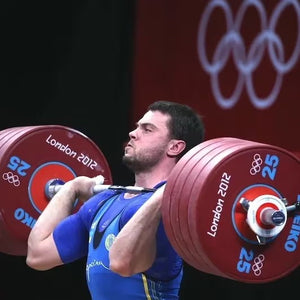
Oleksiy Torokhtiy is a professional athlete boasting 20 years of experience in Olympic weightlifting. With multiple European and World titles under his belt, he has showcased his prowess in two Olympic Games (Beijing 2008 and London 2012). Upon concluding his illustrious career, Oleksiy dedicated himself to coaching. By 2022, he had conducted over 200 weightlifting seminars worldwide. He is the visionary behind an international sportswear and accessories brand known for its motto, “Warm Body Cold Mind.” Additionally, he is an esteemed author and the creator of a series of training programs and eBooks.
If you have any questions/suggestions/any other inquiry, you can reach out to us via email - reviews@torokhtiy.com
Experience:
If you have any questions/suggestions/any other inquiry, you can reach out to us via email - reviews@torokhtiy.com