The Greek Program: Train Heavy. Adapt. Perform.
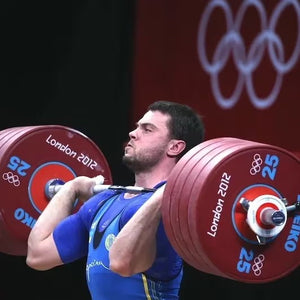 Author: Oleksiy Torokhtiy (Olympian with 21 years of Oly Lifting experience)
There is a point in Olympic weightlifting where technique alone is no longer enough. You know how to Snatch and Clean & Jerk. At 70–80%, the movement feels familiar, positions are controlled and confidence is rarely a problem. Then 90% goes on the bar and suddenly everything changes.

The pull feels different. Timing becomes less forgiving. You hesitate under the bar - small technical mistakes become much more expensive. And a weight you are physically strong enough to lift can suddenly feel psychologically heavy.
This raises an interesting coaching question: what if 90–100% stopped feeling like unfamiliar territory?
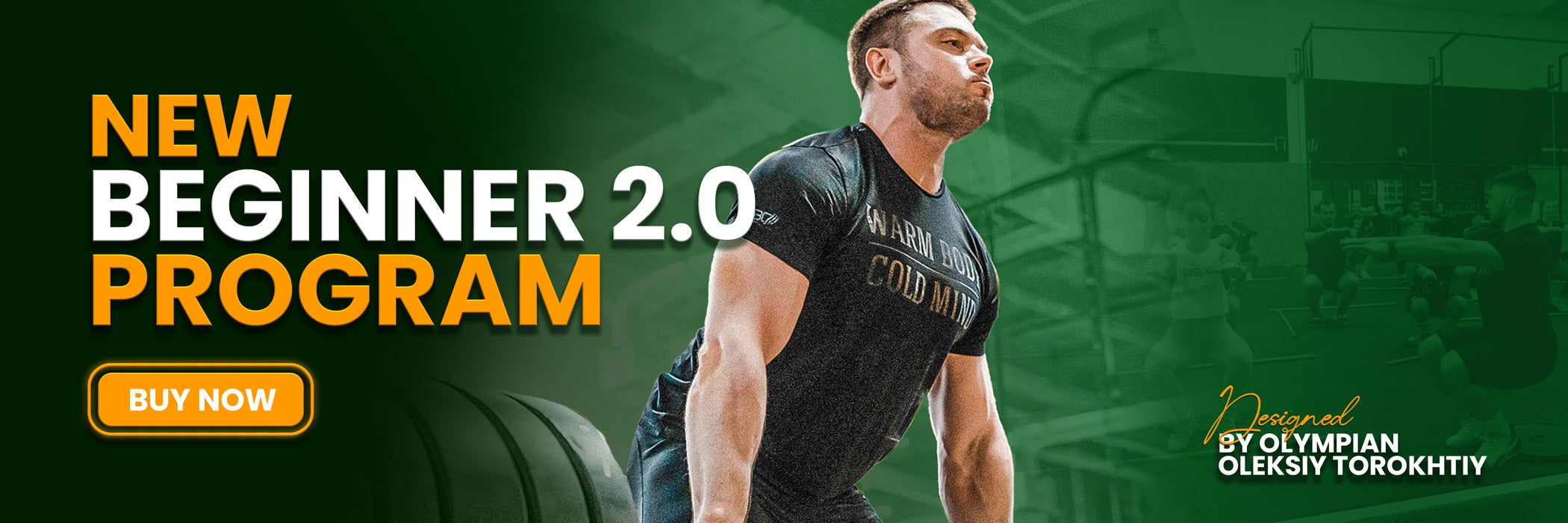
That idea is at the center of the new Greek Program - a cycle built around frequent exposure to heavy weights, technical consistency, autoregulation and the ability to perform when the bar gets serious.
The program was inspired by publicly available information about the training principles associated with one of the most successful periods in European weightlifting history: the Greek Dream Team era under Christos Iakovou. But before we talk about the program, we need to talk about the team that inspired it.

The Greek Dream Team
From the early 1990s through the Athens 2004 Olympic cycle, Greece became one of the dominant forces in international weightlifting. The names from that period need little introduction to serious weightlifting fans: Pyrros Dimas, Kakhi Kakhiashvili, Valerios Leonidis, Leonidas Sabanis, Leonidas Kokkas, Viktor Mitrou, Giorgos Tzelilis, Pavlos Saltsidis and Christos Spyrou. Behind the team was head coach Christos Iakovou.

Between 1992 and 2004, Greek weightlifters collected 12 Olympic medals, including five golds, while also accumulating an extraordinary number of World Championship medals. There were legendary individual performances along the way.

Dimas became Olympic champion in Barcelona in 1992 and successfully defended his title in Atlanta and Sydney before finishing his Olympic career with bronze in Athens.
Kakhiashvili won three consecutive Olympic titles across three different weight categories.

At the 1999 World Championships in Athens, all eight Greek male lifters won medals in their respective categories. This wasn’t one athlete having an exceptional career. It was a system producing results across athletes, weight categories and multiple Olympic cycles. And that is what made the training behind this generation so interesting to study.
Looking Beyond the Medals
I had the opportunity to meet both Pyrros Dimas and Kakhi Kakhiashvili. As an Olympic weightlifter myself and later as a coach, I have always been interested not only in what great athletes lifted, but in how they prepared themselves to lift it.

When you look at an Olympic champion standing on the platform with a world-class weight overhead, you’re seeing only the final few seconds of a process that took years.

The more interesting questions happen before that moment.
How often did they train heavy?
How were training loads adjusted?
How did they organize testing?
How did they respond when an athlete was having a bad day?
How did they make maximal weights psychologically normal?
The publicly documented information surrounding the Greek training approach gives us some fascinating clues: mostly classic lifts (Snatch and C&J), Front/Back Squats at 1 RM, testing, adjustment. And, importantly, repeated exposure to high intensity. That became the starting point for this project.
This Is Not the Original Greek National Team Program
This distinction is important. The Greek Program is not presented as the exact historical program used by the Greek national team, nor is it a leaked or secretly obtained training plan.
It is based on publicly available information describing training principles and methods associated with the Greek Dream Team era. Those concepts were then interpreted through modern coaching practice and adapted into a structure appropriate for today’s experienced amateur and non-professional Olympic weightlifters.
There is an obvious reason for doing this. An elite national-team athlete preparing for the Olympic Games lives in a completely different training environment from most athletes reading this article. Professional athletes may organize their entire lives around training and recovery.
An amateur athlete might finish a heavy session and then go to work for eight hours. They have jobs, families, travel, poor nights of sleep and normal life stress. Simply copying elite workloads would miss the entire point.
The objective was therefore not to copy the Greek team. It was to understand some of the principles behind the system and ask: how can we make these ideas useful today?
Greek Program

The Greek Program is a 6+ weeks Olympic Weightlifting system built around frequent heavy exposure, technical consistency and daily performance.
Inspired by publicly available training principles associated with the Greek Dream Team era of 1992 - 2004 and adapted for today's weightlifter.
Make Heavy Weights Normal
This is the central idea behind the Greek Program. Many programs spend weeks gradually building toward one heavy session. There is nothing inherently wrong with that approach, but it can create an interesting situation.
The athlete becomes very comfortable lifting 70%, 75% and 80%. Then suddenly they are expected to perform at 95–100%. Physically, they may be prepared, but psychologically and technically, the experience can be completely different.
The Greek-inspired approach takes another route.
You meet heavy weights regularly - you lift.
You observe what happens and adjust.
You recover, then you come back and meet them again.
The goal isn’t reckless maxing. It isn’t trying to set a Snatch PR every Monday.
It is structured exposure to heavy lifting. Over time, 90% stops being an event - it becomes training. And when competition day comes, the athlete isn’t suddenly entering unfamiliar territory.
This is where an important distinction has to be made.
When you see 100% in this program, it does not necessarily mean your lifetime personal record. Think of it as your best successful lift under the conditions of that particular training session.

For example, imagine your best Back Squat is 120 kg. But today you’ve already completed heavy Snatches and Clean & Jerks, and Back Squat is your third major exercise. Maybe 113 kg is the heaviest technically solid single you can produce.
Then, for that session: 113 kg is your 100%.
This changes how you approach heavy training. Instead of blindly chasing a number written on a spreadsheet, you are constantly evaluating performance.
How is the bar moving?
How consistent is the technique?
How tired are you?
How confident are you?
What happened on the previous attempt?
The philosophy is simple: Push when you’re ready. Adjust when you’re not. Autoregulation does not mean training without a plan. It means having a plan intelligent enough to respond to the athlete standing in front of you today.
How the 3+1 System Works
The heart of the Greek Program is a repeatable four-week structure.

Setting Loads
The first week establishes the baseline. Current test results are used to determine working loads and initial training volume. The athlete begins working with these numbers while the coach observes how they respond.
Consolidation
The goal of week 2 is consistency. The athlete continues working around the established loads while improving confidence and technical quality. If accumulated fatigue appears, especially early in the week, loads can be adjusted rather than blindly forced.
Improvement
In week 3 the athlete begins pushing closer to their best performance. Strong singles around 100% become more important. If the athlete is moving exceptionally well, a small PR can be attempted, but it has to be earned.
Deload & Test
In week 4 training volume comes down by approximately 30%, while much of the work stays around 85%. The objective is to reduce fatigue without losing the feeling of meaningful weight. At the end of the week, the key lifts are tested again and those results help establish the next cycle.
Give the System Time
This may be one of the most important instructions in the entire program: do not judge it after four weeks - four weeks is the length of one 3+1 cycle. It is not the expected timeline for fully adapting to the system. The structure is designed to be repeated. Each cycle provides new information about the athlete and gives you another opportunity to adjust training loads, improve technical consistency and become more comfortable with heavy weights.

Watch what happens to your Snatch and Clean & Jerk, Front and Back Squat. Look at technical consistency at 90%+, at the percentage of successful heavy attempts. Pay attention to confidence around maximal weights. Look at recovery and, ultimately, look at competition performance.
The program recommends approximately 6–7 months of repeated 3+1 cycles before evaluating its full effect. That’s a very different mindset from buying a four-week program, completing 20 sessions and asking, “Did my Snatch go up?”
The Greek Dream Team wasn’t built in four weeks. Neither will your best lifting be. Give the system time. Repeat the process and judge the trend - not one test.
Preparing for Competition: The Final 10 Days
The program also includes a dedicated 10-day competition taper. To use it correctly, work backward from your competition date so that the final major max-out occurs approximately 10 days before you compete. That is your final opportunity to test the BIG lifts.
After that, the objective changes. You are no longer trying to become stronger, you’re trying to reveal the strength you’ve already built. Volume and intensity progressively decrease. Competition movements stay technically sharp. Recovery becomes increasingly important and this is where discipline matters. Feeling fantastic five days before competition does not mean you should add another max-out. The work has already been done - save your best lifting for the platform.
Who Is the Greek Program For?
This is not a beginner weightlifting program. It is intended for athletes who already have established Snatch and Clean & Jerk technique, experience with structured Olympic Weightlifting training and enough understanding of their own body to make sensible adjustments when necessary.
It makes particular sense if you already know how to lift but want to become more consistent at high percentages; if strength alone isn’t translating into bigger competition lifts; if 90%+ still feels psychologically different or if you’re preparing for a competition and want a structured way to combine heavy exposure with a final taper.
The Program Is the Structure. You Are Still the Coach.
No training program can predict how you will sleep next Thursday, it doesn’t know that work was stressful, it doesn’t know that you traveled yesterday, that your legs feel unusually heavy or that your warm-ups are moving better than they have all year.
That is your responsibility. A written program gives you structure. Good training requires interpretation. If an athlete is performing exceptionally well, there may be an opportunity to push.
If technique is deteriorating and confidence is disappearing, the intelligent decision may be to reduce the load. The program is the vehicle. You are still the driver.
Perform When It Gets Heavy
The Greek Program was created as part of the 10-year anniversary of Torokhtiy Weightlifting creating training programs. And for this project, I wanted to look backward in order to create something useful going forward.
The Greek Dream Team represented an extraordinary period in Olympic Weightlifting. This program does not attempt to recreate their training environment or claim to reveal a secret formula behind their success. Instead, it takes publicly documented ideas associated with that era and asks how some of those principles can be applied responsibly to today’s weightlifter.
The result is a system built around something simple: meet heavy weights often enough that they stop feeling unfamiliar.
Train. Evaluate. Adjust. Come back.
Repeat the process long enough to see what it can actually do, because ultimately, the goal isn’t to make 100% feel light. - the goal is to be ready when it gets heavy.
Explore the Greek Program!
Why Trust Us?
With over 20 years in Olympic Weightlifting, our team does its best to provide the audience with ultimate support and meet the needs and requirements of advanced athletes and professional lifters, as well as people who strive to open new opportunities and develop their physical capabilities with us.
All products we select are primarily approved and tested by the Olympic Weightlifting Champion Oleksii Torokhtiy. Under his guidance, we provide honest and reasonable assessments of the products we review by checking their characteristics, packaging, design, comfort and durability features, and general product rating. We select products from only high-quality and trusted sports brands, thus vouching for their quality.
The product testing process is described in more detail here
Olympic Weightlifting Champion, PhD in Sport Science


Experience: 21 years
Best Results: Snatch – 200 kg, C&J – 240 kg
Oleksiy Torokhtiy is a professional athlete boasting 20 years of experience in Olympic weightlifting. With multiple European and World titles under his belt, he has showcased his prowess in two Olympic Games (Beijing 2008 and London 2012). Upon concluding his illustrious career, Oleksiy dedicated himself to coaching. By 2022, he had conducted over 200 weightlifting seminars worldwide. He is the visionary behind an international sportswear and accessories brand known for its motto, “Warm Body Cold Mind.” Additionally, he is an esteemed author and the creator of a series of training programs and eBooks.
If you have any questions/suggestions/any other inquiry, you can reach out to us via email - reviews@torokhtiy.com
Experience:
If you have any questions/suggestions/any other inquiry, you can reach out to us via email - reviews@torokhtiy.com