Welcome to Overhead Strength & Stability 2.0
 Author: Sergii Putsov (20 years of Oly Lifting & Training experience)
In Olympic weightlifting and functional training, athletes often believe their biggest limitation is strength. They try to squat more, pull more, lift heavier. But progress still stalls, because the real problem is somewhere else - overhead.
Why Your Overhead Position Is Holding You Back and How to Fix It
You can have strong legs and a powerful pull, but if you can’t control the bar overhead, your performance will always be limited.
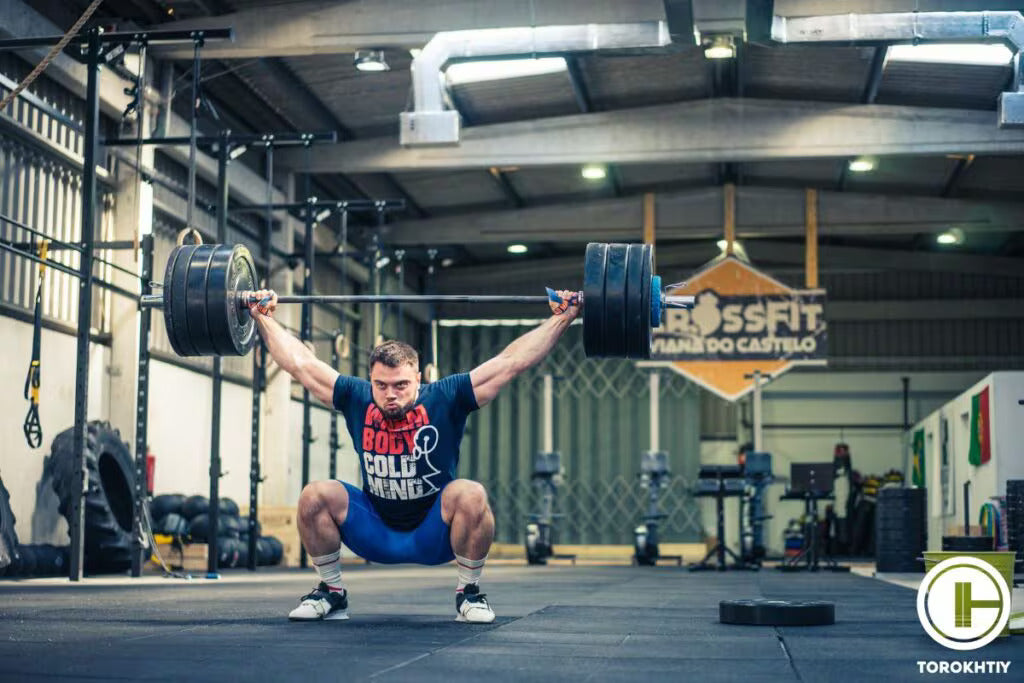
And this is something we see all the time from beginners to advanced athletes: unstable lockout, soft elbows, forward collapse in the snatch, jerk that never feels “secure”, shoulder discomfort under load.
At some point, every athlete realizes:
“I’m strong enough to lift it… but I can’t fix it overhead.”

Overhead Is Not a Position - It’s a System
Most athletes treat overhead as just a final position. But in reality, it’s a combination of three key elements working together: strength, stability, coordination.
And if one of these is missing, the whole system breaks down. This is exactly why simply “doing more snatches” or “stretching shoulders” doesn’t solve the problem. Because overhead stability is a trainable capacity, not a side effect of training.
The 3 Components of a Strong Overhead Position
After working with athletes at all levels from functional fitness to elite weightlifting, we consistently see that overhead performance depends on three pillars.
1. Overhead Strength
This is the most obvious, but also the most misunderstood. Many athletes rely only on: Snatch, Jerk, Overhead squat. But these lifts don’t build strength efficiently - they test it.
To actually improve overhead strength, you need:
- Pressing variations
- Tempo work
- Isometric holds
- Controlled overload
Without this, your overhead position will always be unstable under heavy loads.
2. Shoulder Mobility + Active Stability
Mobility alone is not enough. You might have a good passive range of motion, flexible shoulders, but still lose control when the bar gets heavy. Why? Because you lack active control in end ranges.
Efficient overhead lifting requires: shoulder mobility, thoracic spine extension, strength in stabilizing muscles. Not separately, but together. As clearly outlined in the program structure, efficient overhead performance requires coordination between mobility, stabilizers and core engagement.
3. Core Stability
This is the most underestimated factor.
Your overhead position is only as strong as your ability to:
- Transfer force from legs → bar
- Maintain balance under load
- Resist movement in unstable positions
Weak core = unstable overhead. That’s why exercises like: dead bugs, planks, anti-rotation work are not “accessory” — they are essential.
Why Most Athletes Never Fix Their Overhead
Here’s the real problem: most training programs don’t treat overhead as a priority. Instead, it’s added at the end, trained occasionally, assumed to improve automatically
But it doesn’t. Because overhead requires specific, structured development. And without it your snatch will always be inconsistent, your jerk will always feel risky, your confidence under the bar will never be stable.
The Real Solution: Train Overhead Like a Skill
To improve overhead, you need to treat it as its own training system. That means: dedicated sessions, structured progression, specific exercises targeting weak links. This is exactly the idea behind Overhead Strength & Stability 2.0.

Inside the System: How Overhead Strength & Stability 2.0 Works
This program is not random accessory work. It’s a 6-week structured system (3 sessions per week) designed specifically to improve overhead control, stability and strength. What makes it different is how it combines multiple elements into one system?
1. Structured Session Design
Each workout includes three key blocks:
Specific Warm-Up
- Mobility drills
- Core activation
- Dynamic stability work
This prepares the exact muscles responsible for overhead control.
Main Load:
- Pressing variations
- Snatch & jerk stability drills
- Squats and positional work
Focused on building strength where it actually transfers.
Accessory Work:
- Unilateral exercises
- Core stability
- Shoulder health
These build durability and long-term progress. This structure ensures that every session targets overhead from multiple angles, not just strength.

2. Smart Load Progression
Instead of guessing weights, the program uses RPE-based loading:
Light → technique and control
Medium → strength development
Challenging → high demand, high focus
This allows athletes to train with precision, adjust to fatigue and maintain quality in every rep.
3. Real Training, Not Just Theory
Look at the exercise selection:
- Asymmetrical presses
- Snatch Sots press
- BOSU stability drills
- Split position work
- Complex barbell combinations
This is not “gym fitness” - this is specific preparation for real lifting situations.

The Dombrovska Factor
What makes this program unique is its collaboration with Iryna Dombrovska. Iryna is not just part of the project - she represents the real application of this system.
- Ukrainian weightlifter
- Training at high frequency and volume
- Preparing for international competitions
Her methodology focuses heavily on:
- Stability under fatigue
- Balance in receiving positions
- Core engagement in dynamic lifts
And this is exactly what you see inside the program. These are not theoretical drills. These are methods tested under real competitive conditions.

Why This Matters for Functional / Hybrid Athletes
If you come from functional training, this is even more important. Because your overhead work is often: under fatigue, under time pressure, combined with other movements. Which means: you need even more control, not less.
This program helps you: stabilize faster, reduce energy leaks and improve efficiency in overhead movements. And most importantly - stay injury-free while doing it.
What Changes When You Fix Your Overhead
Once overhead becomes a strength - everything changes. You’ll notice: more confidence under the bar, faster fixation in snatch and jerk, better balance in receiving positions, less shoulder discomfort, more consistent lifts. And most importantly - your strength finally starts transferring into results.

Who This Program Is For
This system is ideal for:
Weightlifters, struggling with snatch lockout, missing jerks forward or backward, lacking confidence overhead.
Functional / Hybrid Athletes, losing time in overhead movements, fatiguing quickly in workouts, dealing with shoulder instability.
Coaches, looking for structured progressions, wanting better tools for overhead development.
Most athletes are not limited by strength. They are limited by what they can control. And overhead is the ultimate test of control. If you don’t train it directly - it will always limit you.
That’s exactly why we built Overhead Strength & Stability 2.0, not as a supplement, but as a system to fix one of the biggest weak links in modern training. If you want to build a strong, stable and confident overhead position - this is your roadmap.
And if you want to see how it works in real training, follow Iryna Dombrovska inside the Torokhtiy Club and watch how these principles are applied at a high level.
Train smart. Stay consistent. And own every position, especially the one overhead.
Welcome to Overhead Strength & Stability 2.0
Why Trust Us?
With over 20 years in Olympic Weightlifting, our team does its best to provide the audience with ultimate support and meet the needs and requirements of advanced athletes and professional lifters, as well as people who strive to open new opportunities and develop their physical capabilities with us.
All products we select are primarily approved and tested by the Olympic Weightlifting Champion Oleksii Torokhtiy. Under his guidance, we provide honest and reasonable assessments of the products we review by checking their characteristics, packaging, design, comfort and durability features, and general product rating. We select products from only high-quality and trusted sports brands, thus vouching for their quality.
The product testing process is described in more detail here
Head of Sport Science, PhD


Experience: 20 years
Best Results: Snatch – 165 kg, C&J – 200 kg
Sergii Putsov, Ph.D., is a former professional weightlifter and National team member, achieving multiple medals in the 94 kg weight category at national competitions. With a Master’s degree in “Olympic & Professional Sport Training” and a Sport Science Ph.D. from the International Olympic Academy, Greece, Sergii now leads as the Head of Sport Science. He specializes in designing training programs, writing insightful blog articles, providing live commentary at international weightlifting events, and conducting educational seminars worldwide alongside Olympic weightlifting expert Oleksiy Torokhtiy.
If you have any questions/suggestions/any other inquiry, you can reach out to us via email - reviews@torokhtiy.com
Experience:
If you have any questions/suggestions/any other inquiry, you can reach out to us via email - reviews@torokhtiy.com