Eastern European Squat Program: Old-School Principles, Modern Strength
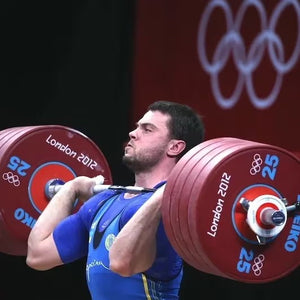 Author: Oleksiy Torokhtiy (Olympian with 21 years of Oly Lifting experience)
During my professional weightlifting career, squatting was never a separate sport inside the sport. I didn’t squat simply because I wanted a bigger Back Squat. I squatted because stronger legs, a stronger trunk and the ability to maintain good positions under heavy load helped me Snatch and C&J more weight. This distinction is important before we talk about my Eastern European Squat Program.

As a professional Olympic weightlifter, I never followed this exact six-week program during my preparation. I used elements of this methodology: Back Squats, Front Squats, pauses, controlled tempo work, different intensity zones, changes in volume and periods where squat strength received more or less attention depending on where we were in the preparation cycle.
Years later, after my competitive career and through coaching athletes from different backgrounds, I started looking at these methods from another perspective.
What happens if we take some of those principles and build a short period where improving squat strength becomes the main objective? That is the idea behind this program.
The result is a six-week specialization cycle with three sessions per week, built around frequent squat exposure, progressive overload, wave-like intensity and controlled fatigue.
What “Eastern European” Means to Me
People sometimes hear “Eastern European training” and imagine there must be some secret exercise, percentage or brutal workout that nobody else knows. Unfortunately, the reality is much less exciting. A big part of the system I grew up with was based on consistency.
You perform the important movements frequently, accumulate technically good repetitions, spend a lot of time working with submaximal weights, manipulate volume and intensity instead of trying to set a personal record every Monday.
And you repeat this process for years.
There were, of course, many different Eastern European schools. Soviet and Bulgarian approaches, for example, could look dramatically different in their use of exercise variation, frequency and maximal loading. Historical Eastern European programming also varied training loads substantially across days and weeks rather than treating every workout the same.
So when I call this an Eastern European Squat Program, I am not saying: This is exactly how every Soviet or Ukrainian champion trained.
It is my application of several principles from that training culture. In this program, those principles are very clear: frequent squatting, technical repetition, predominantly submaximal work and planned progression instead of random loading.

One lesson I learned early in my career was that training is not competition. You can finish a great training session without lifting anything close to your maximum. An athlete may complete many quality sets at 70–80%, leave the gym tired but technically solid and think: Nothing special happened today.
The coach may look at exactly the same session and think: Perfect.
Because the purpose was never to demonstrate strength that day. The purpose was to build strength that would be available later.
Why I Turned These Ideas Into a Standalone Program
For a professional weightlifter, squat training has to exist inside a much bigger system. I still had to Snatch, to Clean, to Jerk. I had pulls, technical exercises, recovery, competition preparation and many other priorities.
The strongest squat in the world doesn’t help much if you’re too tired to lift the bar in competition. But athletes from other sports often have periods during the year when their priorities can change. This is especially true during the off-season.
Over the years, I have seen athletes from combat sports, wrestling, rugby, American football, hockey, functional fitness, throwing events, sprint and jump disciplines and other field and court sports use squat-focused strength work as part of their physical preparation.
They aren’t trying to become weightlifters. They aren’t trying to become powerlifters either. For them, the squat is a tool. For several weeks, we can make general strength a bigger priority. Then, as competition approaches, the emphasis can gradually move back toward sport-specific preparation.
That’s an important way to understand this six-week program. You temporarily make squat development a priority to build a bigger strength foundation that you can later take back to your sport.
Three Squat Days Doesn’t Mean Three Max-Out Days
The program contains three sessions per week, but that doesn’t mean I want you to destroy your legs three times every week.
Frequency only works when the stress is managed intelligently. Across the program you’ll find regular Back, Front, Pause, Tempo Back Squats and contrast work. Accessory exercises are included, but intentionally kept secondary because the main objective is squat development.

This is something athletes from other sports sometimes misunderstand. They see “three squat sessions” and immediately imagine three brutal leg days. That’s not the idea.
One session can provide more volume. Another can emphasize positions and control. Another can introduce higher intensity or explosive work.
Frequency also has another benefit: practice. The squat is a strength exercise, but it is still a movement skill. Every repetition gives you another opportunity to practice bracing, balance, descent, depth, trunk position and force production. You aren’t simply training your legs three times. You’re practicing how to express strength through the squat three times.
Before Adding Weight, Make the Weight More Difficult
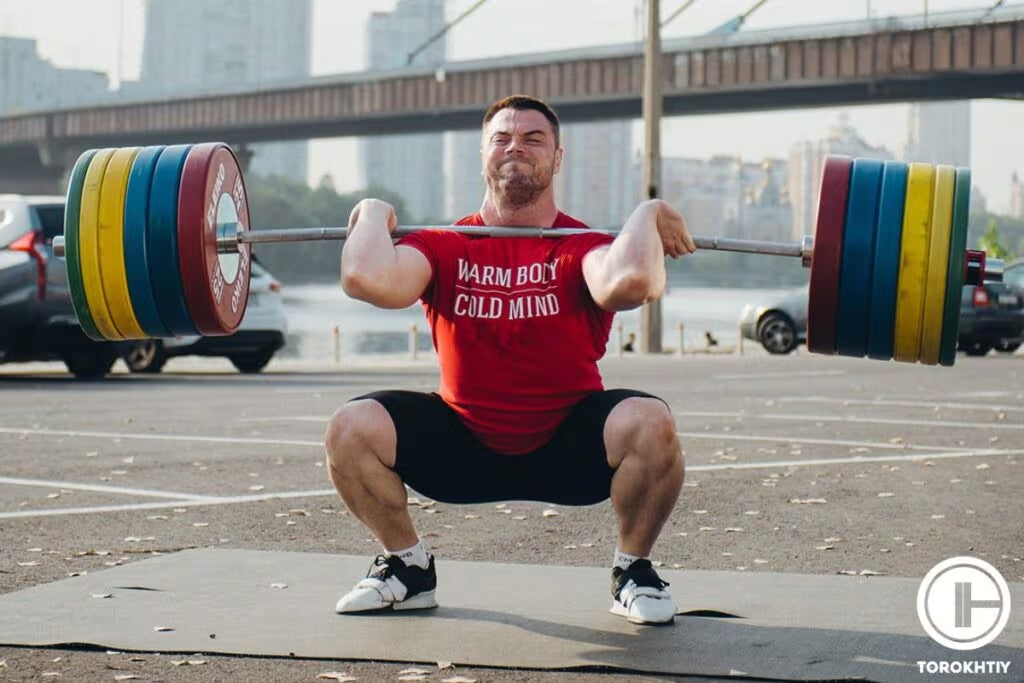
One of my favorite examples is tempo squatting. Let’s say I give an athlete 65%. The immediate reaction can be: Coach, this is light.
Okay. Now lower the bar for three seconds. Pause for one second in the bottom. Maintain your position. Then stand up as explosively as possible. Repeat that for the prescribed repetitions and sets. Come back to me afterward and tell me whether 65% is still light.
The program uses prescriptions such as 3-1-X-0: three seconds down, one second in the bottom, explosive concentric phase and no additional pause at the top. The purpose is to improve movement control, positional strength and technical consistency.
This is one of the principles I really like from my own training background:
Before automatically putting more kilos on the bar, find out whether you can create more adaptation from the kilos already there.
Tempo increases time under tension. A pause removes some of the help you get from immediately changing direction. Controlled eccentrics expose problems with balance and positioning.
The program specifically instructs athletes to reduce the load if they cannot maintain the prescribed tempo. Quality comes before weight. That is training.
Adding 10 kg because your ego is having a good day is something else.
Eastern European Squat Program

Train with the same principles that built generations of elite Eastern European lifters - updated with modern programming, recovery, and sports science.
- 6-Week Program
- 3 Workouts per Week
- Designed by Olympian Oleksiy Torokhtiy
- Lifetime Access
Don’t Just Train the Squat. Train the Weak Position.
This is also why the program doesn’t contain only regular Back Squats. If an athlete is weak coming out of the bottom, simply adding more Back Squats doesn’t automatically solve the problem.
If the torso collapses under load, adding kilos can actually give the athlete more opportunities to practice collapsing.
So we attack positions.
The Pause Back Squat develops control and force production from the bottom.
The Front Squat places greater demands on maintaining an upright position.
The Tempo Squat makes it much harder to hide poor control during the descent.
This matches one of the main objectives of the program: not only improving maximal Back and Front Squat strength, but also improving positional strength and technical consistency under moderate and heavy loads.
As a coach, I don’t only want to ask: How can I make this athlete stronger?
A better question is often: Where exactly is this athlete losing strength?
Strength Is Good. Strength You Can Use Is Better.
Another interesting element in the program is contrast training. In selected workouts, you’ll perform a heavy Back Squat set and follow it with Squat Jumps.
Why? Because producing a lot of force and producing force quickly are not exactly the same quality.
I’ve seen athletes with very impressive squat numbers who weren’t particularly explosive. I’ve also seen athletes with smaller squat numbers who could express the strength they had extremely quickly. For most sports, the number written in your training diary isn’t the final objective.
The question is: What can you do with that strength?
The contrast method in the program pairs a heavy strength movement with an explosive movement to connect force production with speed. The instructions also make an important point: the jumps aren’t conditioning. If speed drops significantly, the purpose of the exercise disappears.
This is one reason I especially like this method for athletes outside Olympic weightlifting. A wrestler needs strength, but must apply it against an opponent. A rugby or football player has to accelerate, change direction and deal with contact. A thrower needs to express tremendous force in a very short period. A jumper or sprinter doesn’t receive a medal for their Back Squat. We build strength because we want that strength to support performance.
Six Weeks: Build, Load, Express
The progression of this program is intentionally simple. During the first weeks, you establish the technical base and adapt to squatting frequently. Then the intensity gradually increases.
By Weeks 3 and 4, the athlete is handling progressively heavier work while still performing controlled variations and accessories. Some of the heavier Back Squat work reaches approximately 80–87%.
Week 5 moves into heavier preparation, including work around 85–90%, while accessory volume starts coming down.
Then we arrive at Week 6. The first sessions reduce the workload. In the final workout, the Back Squat progression moves through 80%, 90%, 95%, 100%, with the possibility of attempting 103–105%.
But here’s the important part: You don’t build your PR in Week 6.
You build it during Weeks 1–5.
Week 6 simply removes enough fatigue and gives you the opportunity to express what the previous weeks created.
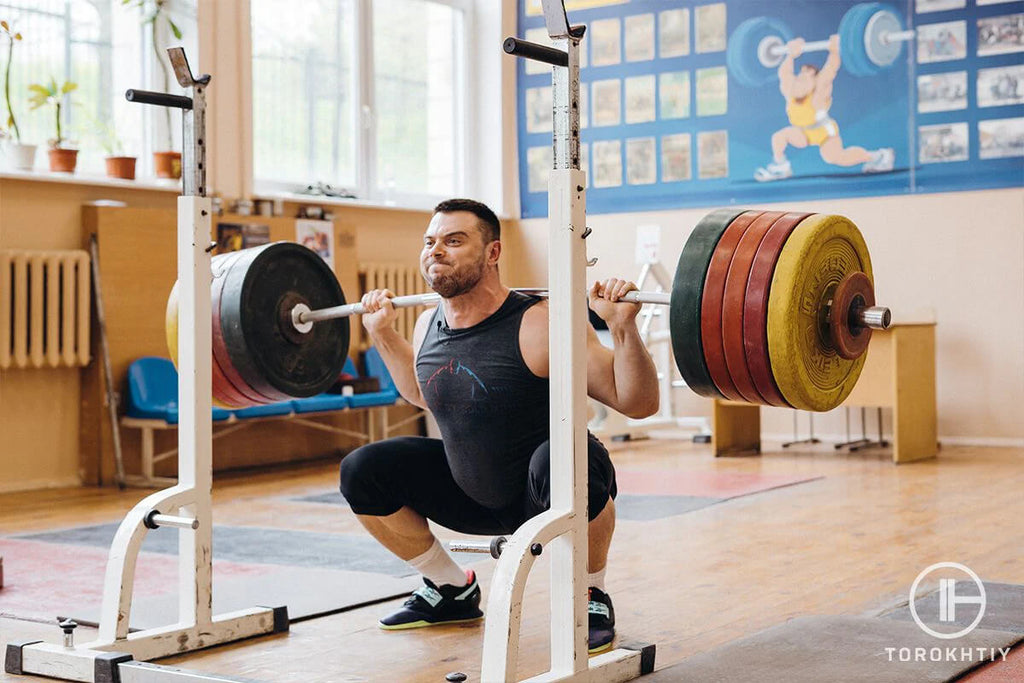
Athletes sometimes think the heavy day is where the magic happens. Usually, the heavy day is where you find out whether you did the boring days correctly.
Don’t “Improve” the Program
There is one final lesson I want athletes to understand.
Structured programs are easy to destroy with good intentions.
- You feel great today, so you add 10 kg.
- You don’t enjoy tempo squats, so you replace them with normal squats.
- You miss Monday, so you squeeze extra work into Tuesday.
- Week 3 feels easy, so you decide to test your max “just to see.”
And suddenly you’re no longer doing the program.
The six weeks are structured around progression, load distribution and exercise selection working together. Consistency, technical focus, recovery and discipline are explicitly part of the system. The program doesn’t care that you’re excited today. It cares where you need to be six weeks from today.
The Lesson I Took From Eastern European Weightlifting
As a professional Olympic weightlifter, I used many elements of this methodology in my own preparation, but I did not use this exact six-week standalone program.
That’s important to say. This program came later: taking principles I knew as an athlete, combining them with years of coaching experience and organizing them into something that can be used by a much broader athletic population.
For a weightlifter, a stronger squat can directly support the Snatch and Clean & Jerk. For athletes from other sports, I see this type of cycle primarily as an off-season strength tool.
For six weeks, you temporarily emphasize squatting to develop the legs, trunk, positional strength, force production and overall strength foundation. Then you take that new capacity back into increasingly sport-specific training. And perhaps that’s the biggest lesson I carried with me from the Eastern European system.
Strength doesn’t come from constantly proving how strong you are. It comes from doing good work, controlling the load, respecting the process and repeating it long enough for adaptation to happen.
Strength should look pretty boring while you’re building it.
When it’s finally time to use it, that’s when it should become exciting.
Why Trust Us?
With over 20 years in Olympic Weightlifting, our team does its best to provide the audience with ultimate support and meet the needs and requirements of advanced athletes and professional lifters, as well as people who strive to open new opportunities and develop their physical capabilities with us.
All products we select are primarily approved and tested by the Olympic Weightlifting Champion Oleksii Torokhtiy. Under his guidance, we provide honest and reasonable assessments of the products we review by checking their characteristics, packaging, design, comfort and durability features, and general product rating. We select products from only high-quality and trusted sports brands, thus vouching for their quality.
The product testing process is described in more detail here
Olympic Weightlifting Champion, PhD in Sport Science


Experience: 21 years
Best Results: Snatch – 200 kg, C&J – 240 kg
Oleksiy Torokhtiy is a professional athlete boasting 20 years of experience in Olympic weightlifting. With multiple European and World titles under his belt, he has showcased his prowess in two Olympic Games (Beijing 2008 and London 2012). Upon concluding his illustrious career, Oleksiy dedicated himself to coaching. By 2022, he had conducted over 200 weightlifting seminars worldwide. He is the visionary behind an international sportswear and accessories brand known for its motto, “Warm Body Cold Mind.” Additionally, he is an esteemed author and the creator of a series of training programs and eBooks.
If you have any questions/suggestions/any other inquiry, you can reach out to us via email - reviews@torokhtiy.com
Experience:
If you have any questions/suggestions/any other inquiry, you can reach out to us via email - reviews@torokhtiy.com