How to Build a Bigger Bench Without Training Like a Powerlifter
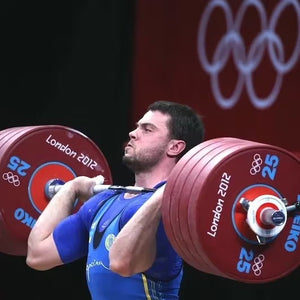 Author: Oleksiy Torokhtiy (Olympian with 21 years of Oly Lifting experience)
I spent most of my life in Olympic weightlifting. So you would think that when people saw a big guy who was obviously a strength athlete, they would ask about my snatch, clean & jerk or maybe my back squat? Not really.
One question always seemed more important: “So, how much do you bench?”
It’s funny because for an Olympic weightlifter, the bench press is hardly the exercise that defines you as an athlete. But outside the weightlifting community, nobody cares that much about your snatch numbers.

Bench press is different. Almost everyone who has spent some time in a gym understands it. You don’t have to explain what 100 kg / 220 lbs on the bench means. And for generations of young guys, it has almost been a rite of passage.
You start training. You discover the bench press. And sooner or later, a number appears in your head: 100 kg / 220 lbs - two big plates.
And when you finally get there? Of course, you immediately want more.
The Exercise That Grows Old With You
What’s interesting about the bench press is that this relationship often starts when you’re a teenager, but it doesn’t necessarily end when you’re young. At 16, you want to bench 100 kg because it sounds cool. At 25 or 30, bench press may still be one of the main exercises you use to develop upper-body strength and muscle.
Then you walk into gyms and strength clubs and see people in their 40s, 50s and 60s still benching. There is even an old gym joke in some strength communities that bench press is the perfect exercise for retirement: eventually the knees and back complain about everything else, but you can still lie down on a bench and press something heavy.
Of course, that’s an exaggeration. But there is some truth behind the joke. Bench press has unusual longevity as an exercise. It can stay relevant from your first years in the gym through Masters-age training because it is relatively easy to understand, simple to measure and straightforward to scale. And people simply enjoy it. There is nothing wrong with that.
You don’t need every exercise in your program to have some complicated sports-science explanation. Sometimes an exercise survives for decades because it works, progress is measurable and doing it is satisfying. The important question is how to keep progressing once simply adding another plate stops working.
You Don’t Have to Be a Powerlifter to Bench Properly
There is an important distinction here. Taking your bench press seriously DOES NOT mean that you need to train like a professional powerlifter. Competitive powerlifting is a sport. A high-level bench specialist may need very specific methods to address individual weaknesses and squeeze another few kilograms out of a competition lift.
That can mean partial-range work, overloads, advanced eccentric methods, accommodating resistance, highly specific competition practice and individualized peaking. All of those methods can have their place.
But if you’re a recreational lifter who wants a 100, 120 or 140 kg bench and a bigger, stronger upper body, copying the preparation of an elite powerlifter can create more complexity than benefit.
Most people need something much more fundamental: Good pressing. Enough pulling. Progressive overload. Appropriate volume. Recovery. Consistency.
Simple doesn’t mean primitive.
Bench Press Program

If you need a structured system that tells you:
- How heavy to train
- How much volume you need
- Which supporting muscles to strengthen
- When to increase your working max
Then a 4-week structured strength program to help you build toward your first 220 lb bench press - with progressive loading, smart volume, and a built-in progress test.
Why “Just Bench More” Eventually Stops Working
When you first start training, progress can seem almost automatic. You bench 60 kg this week. Next week you try 62.5. Then 65. For a while, almost everything works because you’re new to training. Eventually, it doesn’t.
This is usually where recreational lifters make one of two mistakes. Some simply keep adding more work: more sets, more bench days, more exercises. Others turn every heavy session into a test. You work toward 90%, then 95%, then perhaps try a PR because the warm-up felt good. If you miss it, maybe you rest five minutes and try again. Heavy weights make the workout feel productive. But demonstrating strength isn’t the same thing as developing strength.
That’s why I like a very simple principle: build strength first - test it second. Your max should eventually become the result of your training, not your primary training method.
Training Max and Ego Max Are Different Things
One useful concept for recreational strength training is separating your actual best lift from the number you use to calculate everyday training. Your training number doesn’t need to impress anyone - it needs to allow you to train productively.
If your best bench is 120 kg, but you calculate every session from 130 kg because that’s the number you believe you should already have, every percentage becomes artificially heavy. Then moderate work becomes heavy work. Heavy work becomes maximal work. Volume quality drops, fatigue rises and progression becomes harder to control. This is where intelligent programming begins: not with a special exercise, but with an honest starting point.

Volume, Intensity and Variation Need Different Jobs
Another common mistake is treating every bench session the same way. If Monday, Wednesday and Friday are all simply “bench heavy,” why do you need three sessions? Different training elements should solve different problems. Heavy pressing develops your ability to produce force against high loads. Moderate-load work gives you more quality repetitions and training volume. Variations can emphasize different positions or musculature without requiring completely different exercises.
And assistance work develops the structure supporting the main lift. For most recreational lifters, you don’t need 15 bench variations.
Paused bench, regular touch-and-go work, close-grip pressing and a small selection of useful assistance exercises can already provide plenty of variation.
The goal isn’t to constantly surprise your muscles. The goal is to give your body a stimulus it can adapt to and then progressively increase that stimulus.
A Bigger Bench Isn’t Built by Bench Press Alone
If your goal is not just a competition result but a genuinely strong upper body, pressing is only part of the picture. Rows and pull-ups matter.
Rear-delt and upper-back work matters, triceps matter, overhead pressing can have a place. And unless there is a reason not to, you should probably still train the rest of your body.
This is one of the major differences between a general bench-strength approach and extreme specialization. I don’t want an amateur athlete to become a person who can bench but can’t do anything else. The goal is to build a stronger person who also has a better bench.
And let’s be realistic: for many recreational lifters, developing a bigger chest, shoulders and arms is part of the motivation too. That’s perfectly fine.
Don’t Confuse Failure With Effort
Another part of gym culture that deserves reconsideration is the idea that a good bench workout should end with someone pulling the bar off your chest. Occasional failure isn’t a catastrophe, but failure doesn’t need to be the objective.
You can train extremely hard while keeping technically good repetitions and a small reserve. This becomes particularly important as you get older. The teenager who can sleep ten hours, eat everything in the refrigerator and return to the gym tomorrow has a different recovery situation from someone who is 45, has a job, children, stress and perhaps a shoulder that remembers twenty years of training.
The principles of strength development don’t disappear with age, but the margin for stupid decisions becomes smaller. That’s another reason bench press can remain an excellent lifelong exercise when the approach evolves together with the athlete.
Progress Needs Feedback
At some point, every program needs to answer a basic question: did the training work? You don’t necessarily need to test a true 1RM to find out. Submaximal performance can tell us a lot.
For example, performing a controlled AMRAP an “as many reps as possible” set at a predetermined percentage can provide useful feedback about whether the current training level is still appropriate.
The important word is controlled. An AMRAP doesn’t have to mean going until the bar stops moving. You can stop while one technically good repetition is probably still available.
Now you have something better than emotion - you have information. If performance improves while technique remains good, you have a reason to progress. If it doesn’t, perhaps the smartest decision is to maintain the current load rather than automatically adding weight.
Don’t guess if you’re stronger - CHECK.
Sometimes Progress Means Doing Less
Strength doesn’t improve in a perfectly straight line. Training creates both adaptation and fatigue. If fatigue keeps accumulating, eventually it can hide the fitness you’ve built. This is where recreational lifters often struggle because reducing training feels psychologically wrong. You’re trying to become stronger, why would you do less?

Because sometimes doing less temporarily allows you to express what you’ve already built. That’s the purpose of a deload. The same logic applies to max testing. You don’t need to max out because four weeks passed or because it’s Monday and you drank an extra coffee. A true Max-Out should have a reason behind it.
And if you hit a PR, you also don’t have to keep adding weight until you finally fail. Sometimes the smartest end to a great training day is a successful lift.
Turning These Ideas Into a System
These principles are what we used when creating my Bench Press Program.
I didn’t want to create a professional powerlifting specialization program filled with exercises that most recreational lifters don’t need.
I wanted something for people who love benching and want to become stronger, while still training like normal human beings. The system uses three weekly training sessions: a heavy bench-strength day, an optional rest-of-body session, and a bench-and-pull volume day.
The basic progression runs through a four-week cycle:
Week 1 - Build the Base
Week 2 - Build More Work
Week 3 - Heavy Strength Work
Week 4 - Performance Check

The fourth week uses a controlled AMRAP at 75% of the Working Max, with 10 quality repetitions as the main benchmark. Performance then helps determine whether the Working Max should remain unchanged or increase for the next cycle.
The exercise selection stays intentionally straightforward: Paused Bench Press, Touch-and-Go Bench Press, Close-Grip Bench Press, incline dumbbell work, rows, pull-ups, rear-delt and triceps work, plus an optional whole-body session.
After multiple productive cycles, a deload can be introduced when recovery and performance suggest accumulated fatigue. Only after that does a Max-Out Week make sense.

The program is intended for healthy adults who already have strength-training experience and understand proper Bench Press technique, not complete beginners learning the movement for the first time.
From Your First Bench to Your Last
That’s perhaps what I like most about the bench press. You might discover it at 16 because you desperately want to press 100 kg. You might still be doing it at 40 because you want to stay strong. And maybe at 60 you’ll still meet your friends in the gym, lie down on the bench and see who has something left in the tank.
The numbers and priorities may change. The enjoyment doesn’t necessarily have to. And whether you’re an Olympic weightlifter, functional fitness athlete, recreational lifter or simply somebody who likes being strong, sooner or later someone will probably still ask: “How much do you bench?”
You might as well have a good answer.
Train with a plan.
Progress with proof.
Max out when you’ve earned it.
Why Trust Us?
With over 20 years in Olympic Weightlifting, our team does its best to provide the audience with ultimate support and meet the needs and requirements of advanced athletes and professional lifters, as well as people who strive to open new opportunities and develop their physical capabilities with us.
All products we select are primarily approved and tested by the Olympic Weightlifting Champion Oleksii Torokhtiy. Under his guidance, we provide honest and reasonable assessments of the products we review by checking their characteristics, packaging, design, comfort and durability features, and general product rating. We select products from only high-quality and trusted sports brands, thus vouching for their quality.
The product testing process is described in more detail here
Olympic Weightlifting Champion, PhD in Sport Science


Experience: 21 years
Best Results: Snatch – 200 kg, C&J – 240 kg
Oleksiy Torokhtiy is a professional athlete boasting 20 years of experience in Olympic weightlifting. With multiple European and World titles under his belt, he has showcased his prowess in two Olympic Games (Beijing 2008 and London 2012). Upon concluding his illustrious career, Oleksiy dedicated himself to coaching. By 2022, he had conducted over 200 weightlifting seminars worldwide. He is the visionary behind an international sportswear and accessories brand known for its motto, “Warm Body Cold Mind.” Additionally, he is an esteemed author and the creator of a series of training programs and eBooks.
If you have any questions/suggestions/any other inquiry, you can reach out to us via email - reviews@torokhtiy.com
Experience:
If you have any questions/suggestions/any other inquiry, you can reach out to us via email - reviews@torokhtiy.com